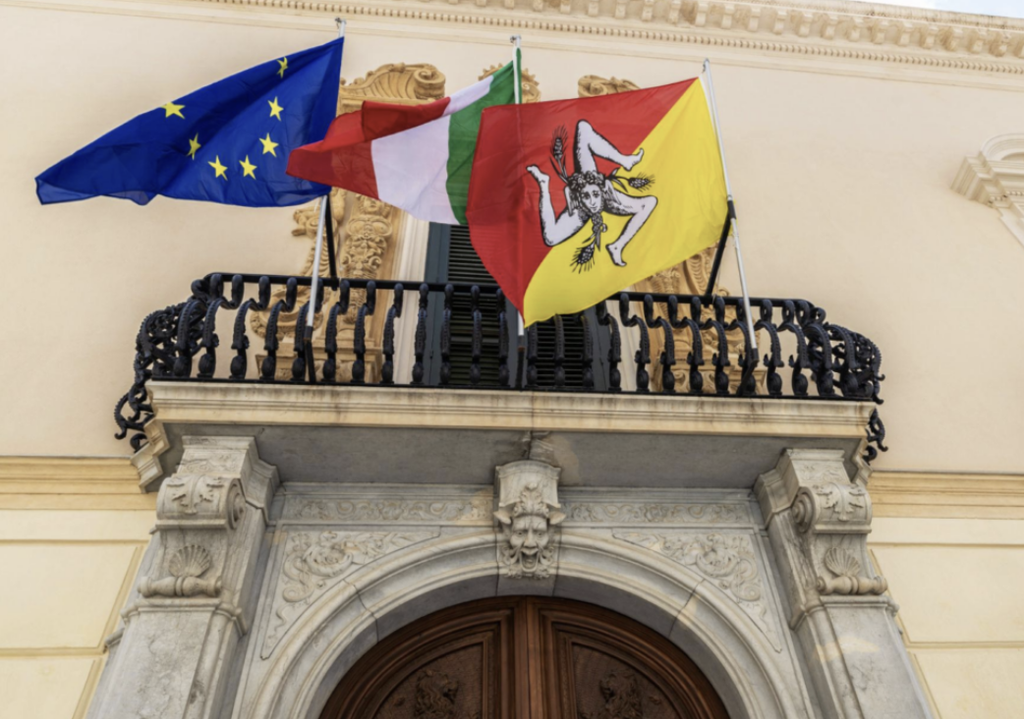


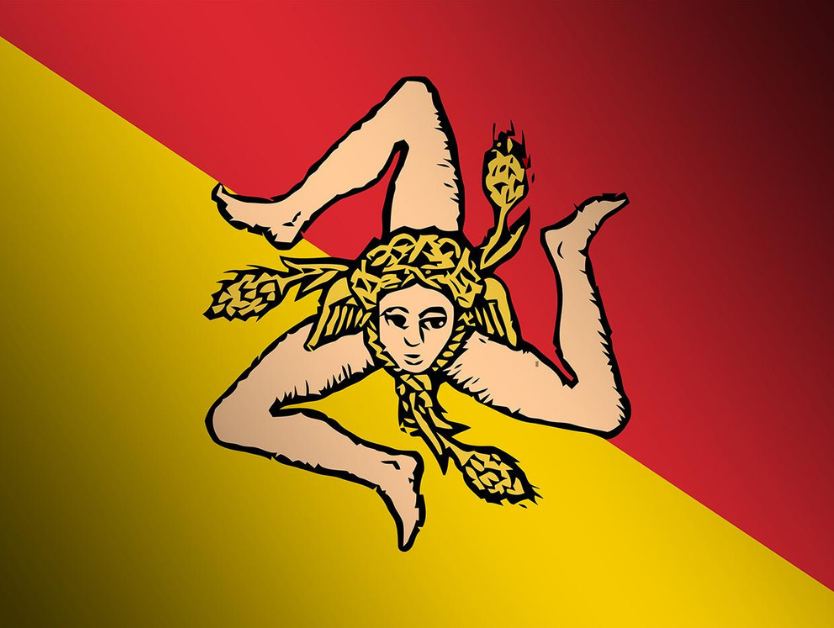
You’ve probably seen it before: three legs spinning around a woman’s face, surrounded by ears of wheat.
But what does the Trinacria actually mean?
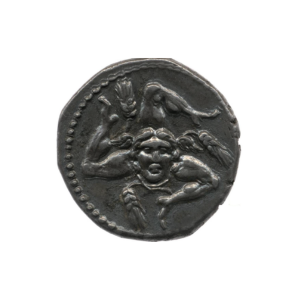
Its story goes back more than 2,000 years. The earliest versions of the triskelion – three legs joined at the centre – appeared on coins in ancient Sicily, including those minted in Syracuse as early as the 4th century BC.
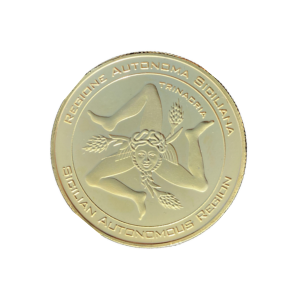
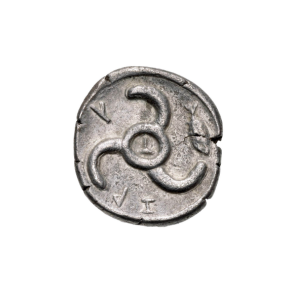
The name Trinacria comes from the ancient Greek Trinakrias, meaning “three capes”. It refers to the three points of the island: Peloro in the northeast, Passero in the southeast and Lilibeo in the west.
At the centre is Medusa, whose image was believed to protect against evil and danger. The ears of wheat surrounding her head represent Sicily’s extraordinary fertility and its ancient role as one of the Mediterranean’s great grain-producing regions.
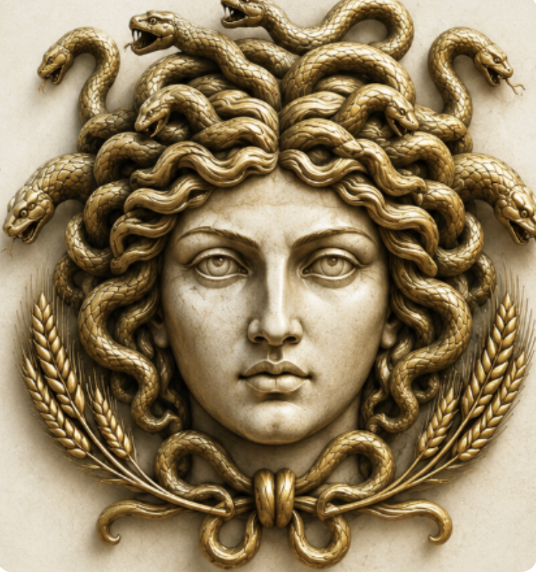
Over the centuries, the Trinacria appeared on coins, coats of arms and other symbols of the island. Today, it sits proudly at the heart of the Sicilian flag, officially adopted in its current form in 2000.
More than just an ancient symbol, the Trinacria has become a powerful expression of Sicilian identity, history and pride.